
Lemoore City Directory Collections
The documented Lemoore city directory holdings are distributed across regional libraries and state catalogs. Tulare Public Library’s genealogy-room inventory is the clearest local shelf record for Polk volumes. The California State Library provides two separate discovery paths: a city/county directory database and a telephone-book database. Kings County Library’s research page supplies local history, obituary requests, newspaper microfilm, genealogy links, and historical photographs. The coverage table keeps a Tulare holding from being mistaken for a Kings County branch holding.
| Collection | Years documented | Where held | Access and use |
|---|---|---|---|
| Polk Hanford-Corcoran-Lemoore | 1967, 1970, 1978, 1986, 1991 | Tulare Public Library Genealogy Room | Onsite reference; includes Armona |
| Polk Kings-Tulare regional run | 1959-2010 with gaps and ranges | Tulare Public Library Genealogy Room | Onsite; often includes Lemoore |
| California city/county directories | Varies by title and year | California State Library History Section | Search by Kings and Lemoore; onsite or copy request |
| California telephone books | Varies by title and year | California State Library | Separate telephone-book database |
| Kings newspaper microfilm | Local titles and years vary | Kings County Library branches and Digital Reel | Branch viewing and obituary request service |
| Federal population census | 1790-1950 public; 1960 opens in 2032 | NARA and partners | Name/place schedules; pair with directories |
The table is a starting map, not a promise that every volume is digitized. Call or email before traveling. The Lemoore branch page lists a renovation closure during the inspected period and directs readers to the library system’s mobile stops and general contact route. The shelf may be local, regional, or a reference copy that requires staff help.
The Polk Lemoore City Directory Run
Polk’s Hanford-Corcoran-Lemoore City Directory is the most specific documented regional run. Tulare’s inventory names 1967, 1970, 1978, 1986, and 1991 and notes that Armona is included. Its wider Kings-Tulare holdings add 1959-1962, 1964-1971, 1972-1988, 1989-1990, 1991-1992, 1994-1995, 1997, 1998-2005, 2007-2010, and 2010. The inventory itself appears to print “1888” in one range where the surrounding sequence suggests a catalog typo, so quote the holding as the library records it and inspect the volume.
Regional coverage means a Lemoore line can sit beside Hanford, Corcoran, or Armona entries. It also means the address may be represented in a street guide even when a surname is absent from the alphabetical pages. Keep the title page and coverage statement with every citation. A clipped page without its title can make a Kings-Tulare book look like a city-only directory.
Kings County Library’s research gateway is useful for the local layer, while Tulare’s genealogy room supplies the documented Polk shelf described above.

The Kings County research image belongs with the collection map because its value is the set of connected sources, not a claim that one online volume contains every Lemoore household.
Kings-Tulare Lemoore City Directory Years
A directory year is a snapshot. It may list a head of household, spouse notation, address, business line, and street-guide entry, but it may omit a child, an unlisted telephone subscriber, or a person who moved between editions. Gaps in the Polk run are normal. Use the nearest documented years and state the gap instead of smoothing it over with a guessed date.
California’s directory database and its telephone-book database should be searched separately. The State Library’s Kings County research guide tells researchers to search “Kings” and a city name in the city/county directory collection, then repeat the work in the phone-book collection. The two catalogs may bridge a missing Polk year, but they represent different sources and should be cited separately.
The Kings County research guide is also a reminder to look beyond Lemoore’s current city boundary. Before 1893, relevant material may be filed under western Tulare County because Kings County had not yet been created.
Search Lemoore City Directory Catalogs Twice
Use the California State Library’s city and county directory database with both “Kings” and “Lemoore.” Then repeat the search in the separate telephone-book database named by the research guide. A result should be checked for the publisher, title, edition, coverage, and physical or copy-request instructions. Catalog search is discovery; a page image or inspected volume is the evidence.
State Library and archive staff can also help identify a year that is not visible in the first result. The Library of Congress Sanborn collection is a separate map source, not a resident volume, but it can hold an address steady by showing street layout and building use. The National Archives census portal supplies a third route for public population schedules. Search each system on its own terms.
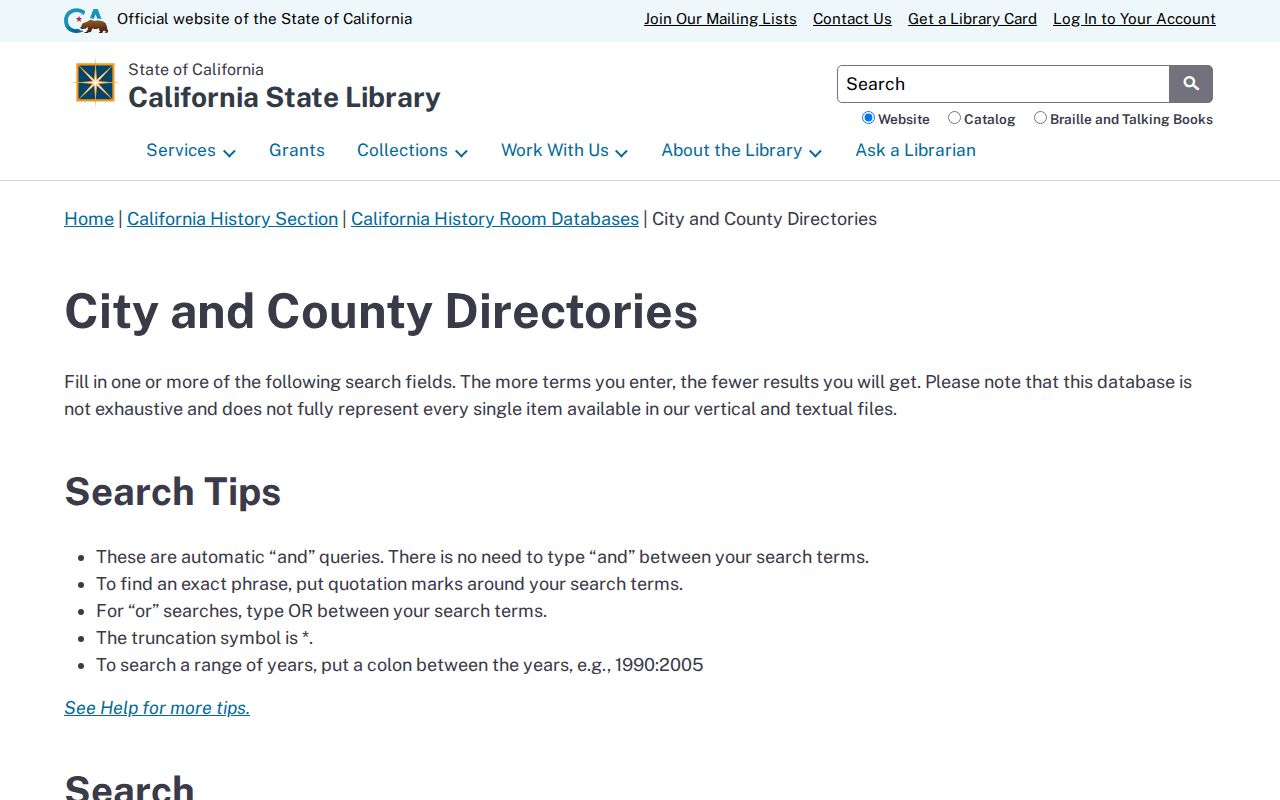
The State Library image shows why a catalog result needs a full citation. Record the database name, search terms, title, year, holding institution, and any copy or onsite note before leaving the result screen.
Reading a Lemoore City Directory Entry
Polk conventions vary by edition, so start with the abbreviation page. A typical regional alphabetical entry may show a surname, given name or initial, spouse in parentheses, widow or widower notation, a line of work or business, and a residence address. An “h” may mean home and an “r” may mean residence or roomer. “Emp” can introduce a business connection. Do not expand an abbreviation until the edition’s key supports it.
| Alphabetical line | Name, initials, spouse notation, address, and a brief work or business clue |
|---|---|
| Street guide | Street name and number, with a listed household or subscriber reference |
| Business section | Business name, public contact line, officers, or address when supplied |
| Telephone book | Subscriber, telephone number, and address; unlisted people are absent |
| Abbreviation key | The edition’s instructions for h, r, emp, spouse, widow, and other marks |
Read a directory line as a dated clue. Compare the same address in the next volume, then check a property or deed source if ownership matters. If a line lists a business, use California Business Search or a local fictitious-business-name record as a separate confirmation rather than treating the directory label as a current filing.
- Householder index
- A name-oriented list of a household head or subscriber, not necessarily everyone at the address.
- Reverse section
- The street-and-number portion of a directory, useful when the name is unknown.
- Edition key
- The publisher’s abbreviation and coverage instructions for that specific year.
Reverse Pages in Lemoore City Directories
The reverse section is the street tool within a regional volume. Start with a known street number, browse the nearby numbers, and record every listed line with the volume and page. A new name at the same number may mark a household change, but it may also reflect a reprint, an address correction, or a business entry. Compare the street guide with the alphabetical section before drawing a conclusion.
The street directory page owns modern APN and permit work. The historical collection belongs on the shelf. When a reverse entry needs a current address or owner check, use the APN, map, and deed chain rather than copying a directory assumption into a present-day claim.
Telephone books can fill a narrow gap, but they omit unlisted subscribers and people without a listing. Newspaper legal notices, marriage announcements, obituary requests, school items, and historical photographs add context. Each source has a different author and date. Keep the citation beside the fact it supports.
Tracing a Lemoore Directory Household
Begin with a known Polk year and copy the entry exactly. Note the spouse mark, address, business or work clue, and every abbreviation. Check the next available year, then the prior available year. If the name changes but the address stays, compare the reverse section, an assessor APN, a deed, a permit, and a newspaper or obituary. Two matching facts are safer than a surname alone.
- Choose the clearest directory year and write down the title, publisher, page, address, and edition key.
- Search the same name and address in the next documented Polk volume, allowing initials and spelling variants.
- Browse the reverse street section to find a new listed household at the number.
- Pair the address with a public 1950 or earlier census schedule, a property identifier, or a dated newspaper.
- Close the trail with an obituary, probate file, cemetery register, or vital certificate when the record boundary permits.
For a one-person modern check, the Lemoore resident lookup workflow is better suited to court, license, business, and unclaimed-property sources. The older volume remains the stronger bridge between an old name and an old address.
Lemoore Directories and the 1950 Census
Federal population schedules through 1950 are public and can supply name, relationship, age, birthplace, work, and residence facts. Enumeration follows place and enumeration district, not a modern ZIP code. Pair a 1900-1950 schedule with a directory address, then check the street, household members, and county context. The 1960 schedule is not open until 2032 under the 72-year rule, so later decades need directories, newspapers, property records, yearbooks, and local collections.
The 1890 schedules were largely destroyed nationally. Lemoore researchers can use the 1888 Sanborn material, Polk or telephone pages, tax and deed sources, newspapers, and the 1900 census as surrounding evidence. A census household is not the same thing as a directory line, and a directory line is not a certified vital event.
The National Archives census collection is the source route for the public schedule context.
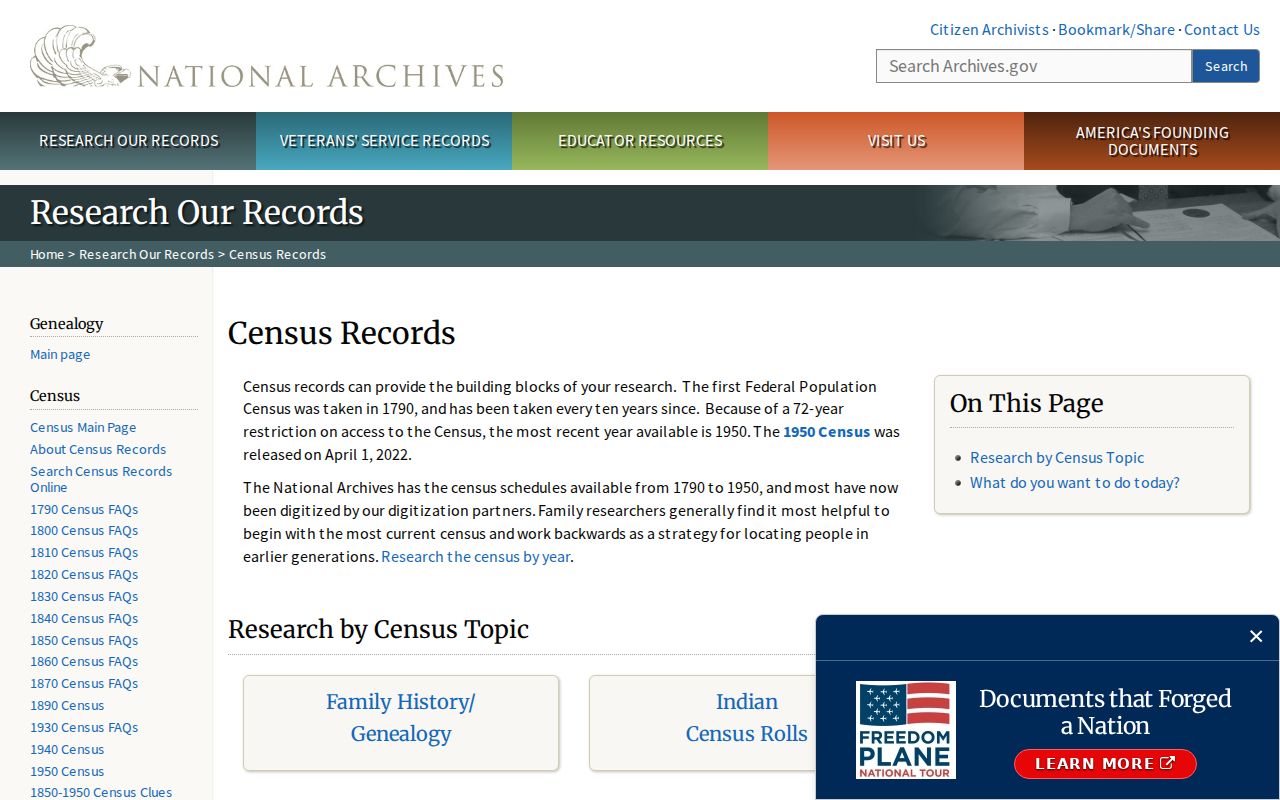
The National Archives image fits the pairing method: census schedules provide household structure, while regional volumes help narrow a street and year between census points.
Lemoore Records on 1888 Sanborn Maps
The Library of Congress Sanborn collection includes an 1888 Lemoore set verified in the research, although a complete official run still needs a direct catalog check. A sheet can date a structure, show a footprint, identify a street or block, and note building use, material, and outbuildings. It cannot name every household. Search the city, edition date, sheet number, and repository note, then compare the footprint with the directory address.
Some later sheets, especially portions of 1923-1930 material, may be copyright-restricted online. State Library or Library of Congress reference service is the fallback. A map scan is not a deed and a caption is a lead. Hold the location with a street guide, lot or block, APN, legal description, and a dated directory line.
Lemoore Library’s Directory Shelf
Lemoore’s library history helps explain why local directory and newspaper material can appear across more than one branch or catalog. The branch opened in March 1912. Its first building was later used as a chicken house, then the collection moved to the First National Bank building at D and Fox. The current C and Hill location opened in 1960 and expanded in 1981. A donated directory can therefore have an institutional trail even when a web catalog entry is brief.
The Lemoore branch page gives current service information, while the research gateway points to obituary requests, Local Genealogical Rooms, newspaper microfilm through Digital Reel, historical photographs, and genealogy links. Renovation closures and mobile library stops can change the best access route. Call 559-852-4026 for the branch or use the system contact route before planning a shelf visit.
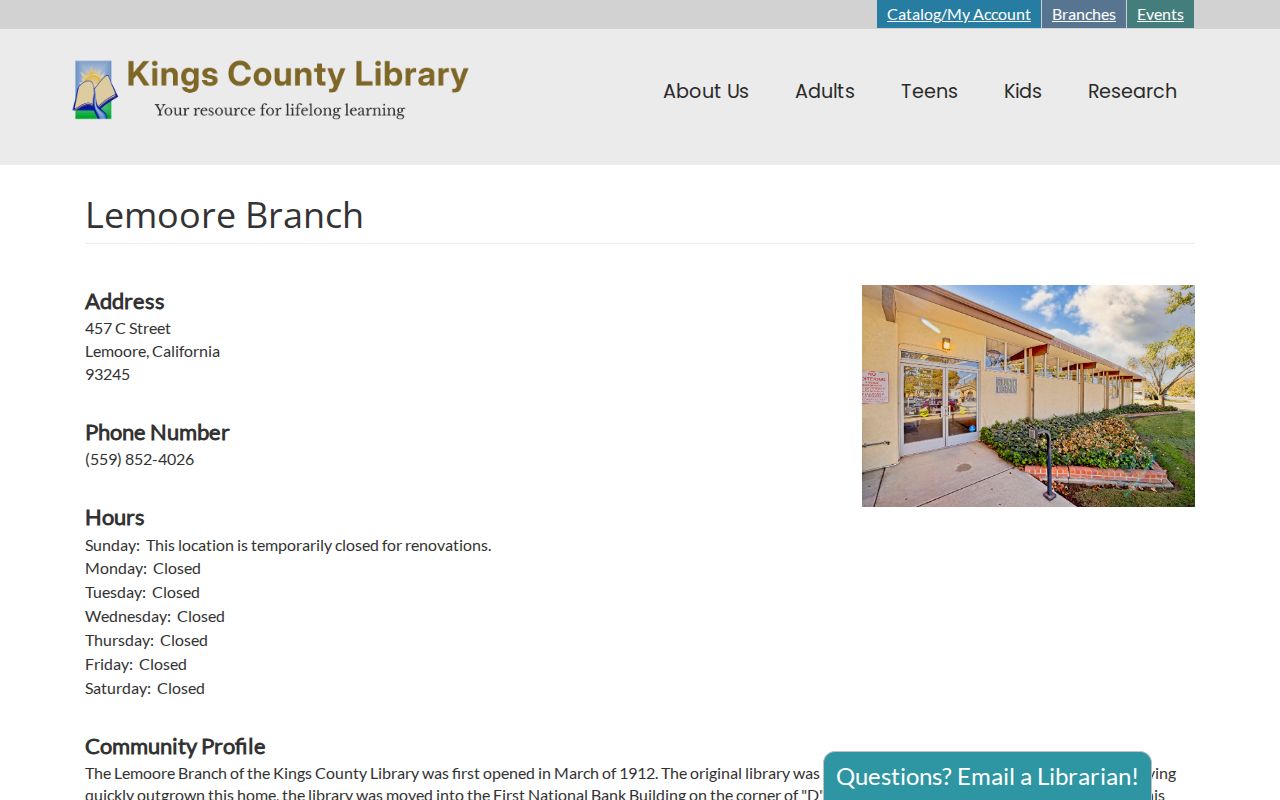
The library image is a reminder that a shelf search may involve a librarian, a microfilm reader, or an onsite reference volume rather than a download.